
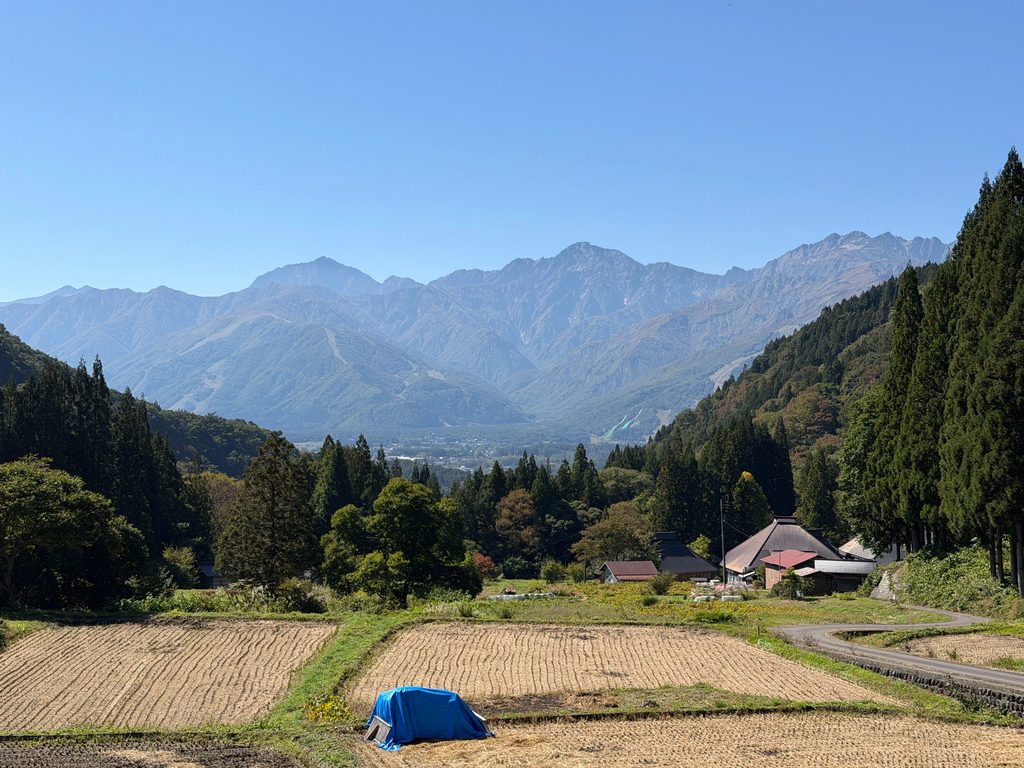
Tucked away on the northern side of Hakuba Valley, Aoni is a small mountain village where the history of rural Japan is still part of the landscape.
Traditional wooden farmhouses line the narrow lanes, while stone-walled rice terraces stretch across the surrounding hillsides. With the Northern Alps rising in the distance, it’s one of those places where architecture, agriculture and nature come together beautifully.
But Aoni’s landscape wasn’t created overnight.
During the late Edo period, villagers worked together to carve an irrigation channel through the rock, bringing water to the fields and making rice cultivation possible on the steep terrain. The terraces that remain today are a lasting reminder of the effort and ingenuity of the people who lived here.
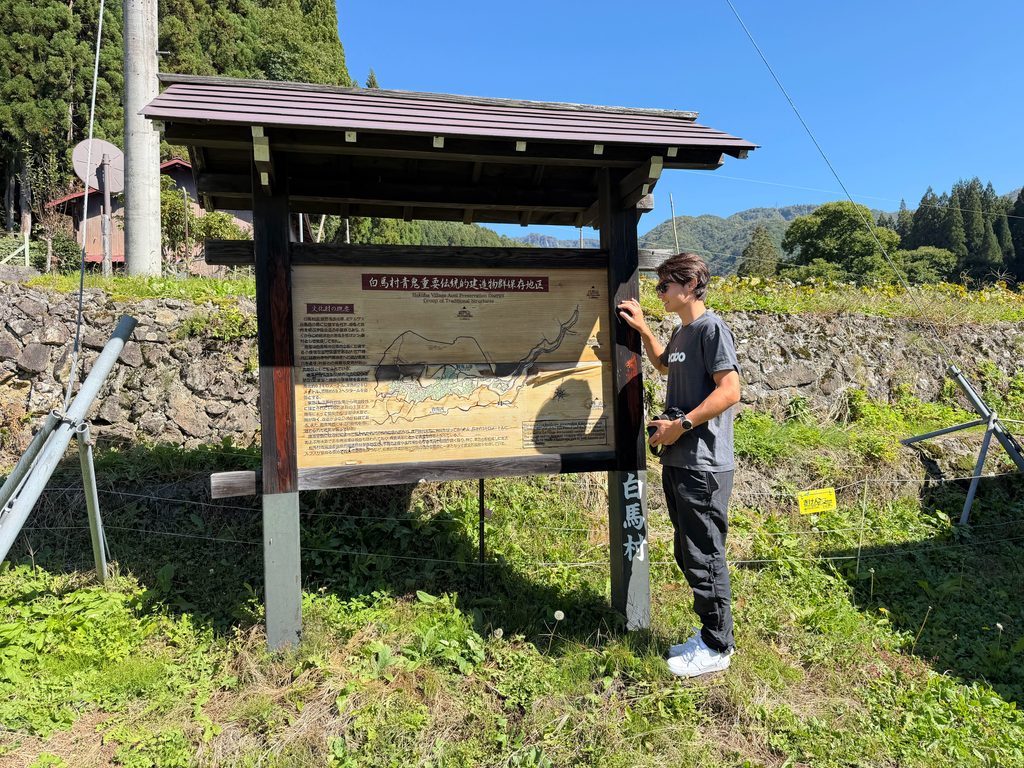
In 2000, Aoni was designated an Important Preservation District for Groups of Traditional Buildings, recognising its historic houses and surrounding landscape.
Today, Aoni offers a glimpse into a quieter side of Hakuba one shaped not by tourism, but by generations of village life.
Sometimes, understanding a place means looking beyond its mountains.
